AI-Powered HR Candidate Scoring Platform
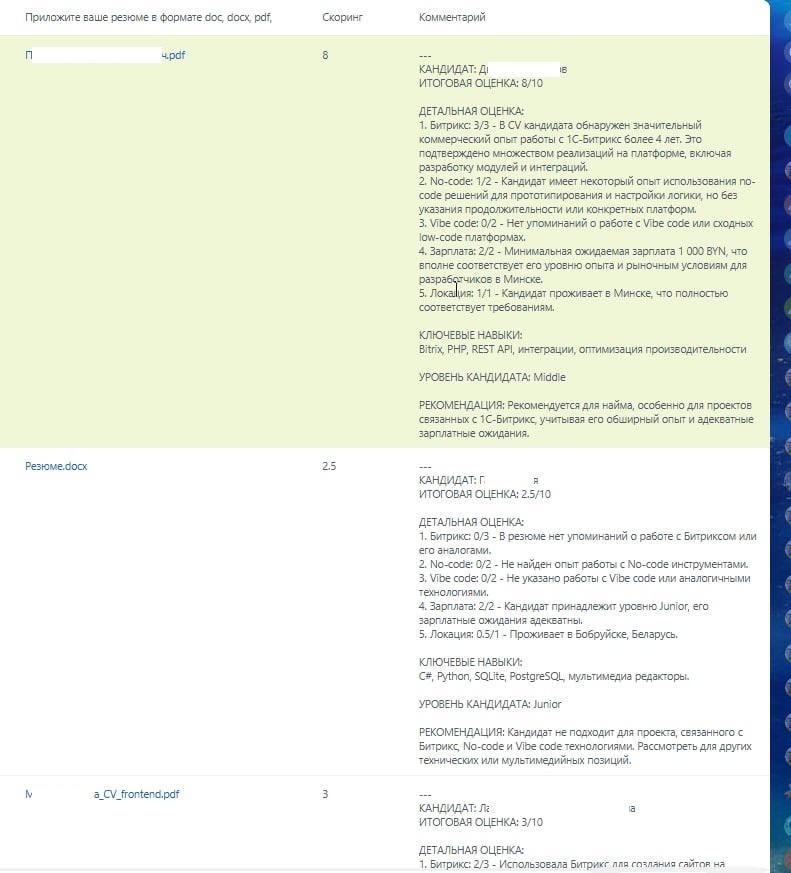
Problem: Hiring Overload & Bias. Every day HR teams face hundreds of applicants. Manually reviewing even 300 resumes (6–8 sec each) can consume 30–40 hours of work. Over half of HR time is spent on routine admin tasks, leaving little room for strategy. This causes delays, inconsistent evaluations, and missed talent. We solve this by automating the first screening step: candidates fill in a form and enter your CRM (e.g. Bitrix24, Salesforce, Hubspot, AmoCRM, etc). The system then scores each applicant on custom criteria (experience, skills, salary, location, etc.) to produce a 0–10 rating. For example, a developer might be scored on CRM and no-code experience, Vibe code skills, salary range and region; an HR manager on leadership, recruiting skills, documentation experience, and more. This hands off the bulk of triage to AI, letting recruiters focus only on the top-scoring candidates.
Key Features & Workflow
Custom Scoring Engine: Define role-specific criteria (e.g. tech vs. admin roles) and weights. Each resume is parsed and scored out of 10 automatically (e.g. technical skills, language tests like “Vibe code”, salary expectations, location match).
Role Templates: Pre-built templates for common positions (Managers, Secretaries, Developers, etc.) with industry-relevant questions. (E.g. HR Manager template scores on personnel management, recruitment/adaptation skills, documentation, salary, location.)
Seamless Integration: Works within your existing workflow. Candidate data can be captured via CRM forms or landing pages (Bitrix24, HubSpot, Salesforce, etc.) or even Google Forms. Scores and profiles sync to Google Sheets/Docs, internal databases or HRIS. Use Zapier/Make/Integromat hooks or APIs to connect to slack/email notifications, Google Calendar interview slots, onboarding systems, and more.
Automated Routing: High-scoring candidates can trigger automatic follow-ups (e.g. interview invites via email or calendar), while low scores can be filtered out, cutting down recruiter workload.
Dashboard & Reporting: Visual dashboards show applicant pool stats, score distributions and pass/fail counts. This data helps HR analyze sources and adjust criteria (integrating with BI or Google Data Studio is straightforward).
Use Cases by Industry and Role
Our platform is flexible across industries and regions. For example:
IT & Tech Staffing : Integrates with any CRM, google docs, etc to score developers on specific skills plus location/compensation. Helps startups or outsourcing firms sift thousands of DevOps and developer applicants quickly.
Administrative & Corporate Roles: Templates for HR, office manager, secretary, sales rep, etc., scoring on communication, organization, CRM experience (telephone/CRM usage), and standard tests. Ideal for finance or legal firms in hiring entry-level to mid-skill staff.
Healthcare / Retail / Manufacturing: Custom criteria for sector skills (e.g. nursing certifications, shop-floor experience, multilingual ability). Easily add new criteria or languages for local market.
Recruitment Agencies: Agencies placing low- and mid-skilled workers (call center, warehouses, support staff) can white-label this scoring as a service to clients. They automatically filter the bottom 50–70% of applicants, passing only top candidates to human recruiters.
In each case, our AI does the heavy lifting of resume filtering. It ensures each role gets a fair, consistent evaluation. As one study notes, AI screening cuts manual bias and can improve hire quality by ~35%
Integration & Automation
Our solution plugs into your existing tech stack:
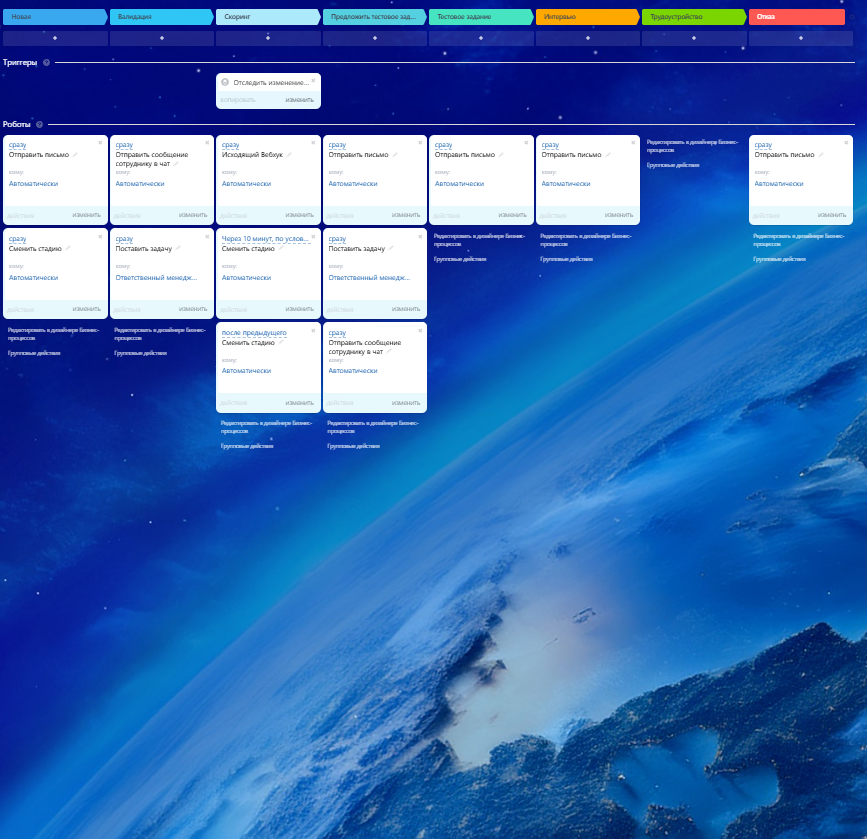
CRM & Applicant Tracking: Pre-built connectors for Bitrix24, Salesforce CRM, HubSpot, Zoho Recruit, etc. New form submissions automatically create candidate records and invoke the scoring engine.
Google Workspace: Store scores and notes in Google Sheets/Docs; generate offer letters or rejection emails via Google Docs templates. Calendar invites (Google Calendar) can be auto-sent to top candidates.
Collaboration Tools: Connect with Slack, Microsoft Teams or email to alert recruiters when promising candidates appear.
Automation Platforms: Compatible with Zapier, Make (Integromat) and n8n – e.g. “If score ≥8, create interview task in Trello/Asana; if ≤3, send courtesy email.”
No-Code Friendly: Even without developers, HR can tweak forms and workflows using simple interfaces. APIs are available for deeper integration into enterprise HRIS or custom dashboards.
This integration means our scoring tool augments existing ATS/CRM systems rather than replacing them. It simply enriches each candidate’s record with objective metrics.
Benefits & ROI
Our platform delivers measurable gains for HR teams:
Massive Time Savings: Automating screening can cut review time by ~75%. In practice, recruiters save 6–8 hours per vacancy on manual resume scanning.
Cost Reduction: By reducing the need for extra screening staff, companies save significantly. AI recruiting tools have been shown to slash hiring costs by ~30%. In a case study, a SaaS firm using AI cut its hiring budget by 35% year-over-year. (In our trials, HR agencies report even higher savings – up to 68% on wages for junior roles – by avoiding unnecessary interviews.)
Better Hire Quality: Consistent criteria mean more qualified candidates reach the interview stage. Studies report 30–35% better match rates and reduced bias. For example, Aptahire found AI-screened candidates 15–20% more likely to succeed in interview. Better fit also cuts turnover: one client saw 20% lower attrition after improving screening.
HR Efficiency: Since HR staff spend ~57% of their time on admin tasks, this tool frees them to focus on interviews, training and culture. It boosts recruiter capacity – handling hundreds of applicants without extra hires.
Scalability: You can handle spikes in applications (for large campus drives or open enrollment) without bottlenecks. The system works 24/7, filtering candidates immediately.